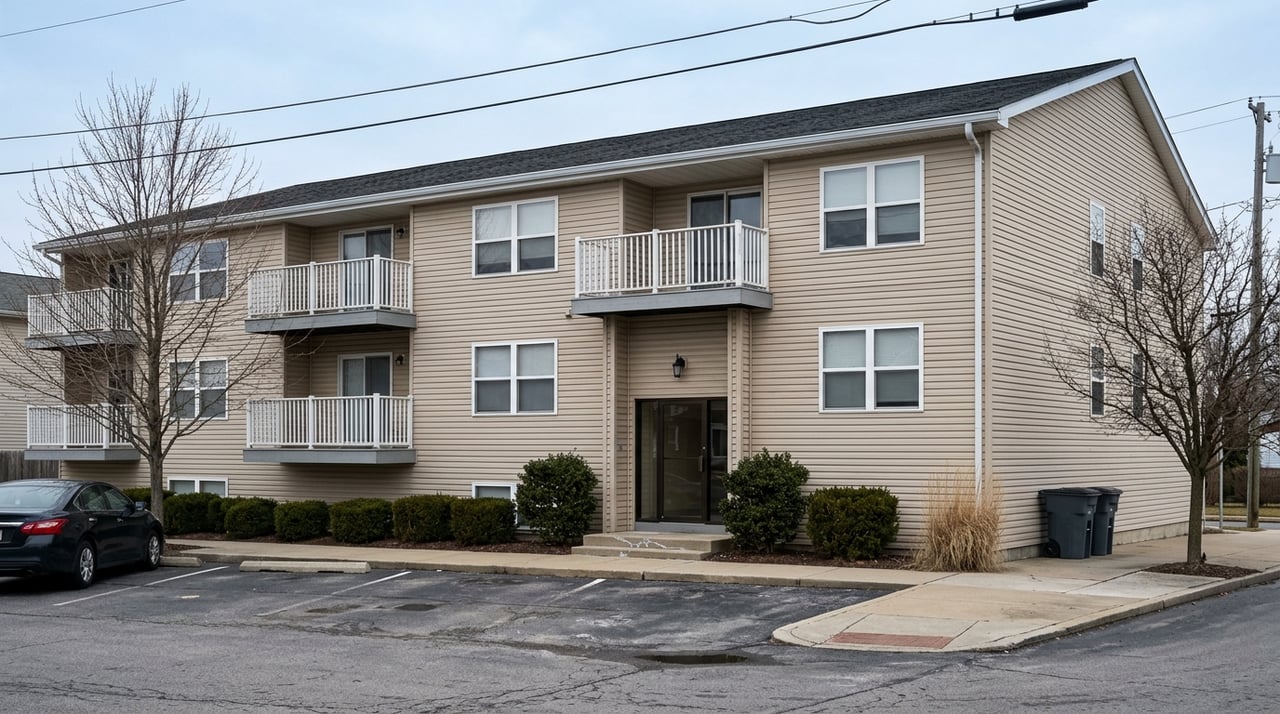
Thinking about buying a rental in Secaucus? It can look like an easy commuter-market play at first glance, but this town has a few local realities that new investors need to understand before they buy. If you want a clearer picture of rental demand, property types, and the rules that can affect your returns, this guide will help you focus on the basics that matter most. Let’s dive in.
Why Secaucus gets investor attention
Secaucus is a compact Hudson County town with an estimated population of 22,640 as of July 2025. It sits in a part of North Jersey where access, convenience, and transportation shape a lot of housing demand. For a new investor, that makes Secaucus less about bargain pricing and more about buying in a location with practical day-to-day appeal.
The local housing profile also points to a fairly balanced market between owners and renters. Census QuickFacts shows a 50.6% owner-occupied rate, and the town’s 2026 housing plan reports 4,325 renter-occupied units out of 8,525 occupied units. That balance matters because it suggests rental housing is a meaningful part of the local market, not a niche segment.
Secaucus is also an expensive market by many first-time investor standards. Census data lists a median gross rent of $2,391, a median owner-occupied home value of $571,900, and a median household income of $139,821. In simple terms, that points to a market where rent levels can be strong, but your acquisition costs may be, too.
What the housing stock looks like
One of the biggest basics for new investors is understanding what kind of housing actually exists in town. In Secaucus, the stock is relatively mature and compact. The town plan says 72.0% of units were built after 1960, the median year built is 1979, and 65.1% of units have two bedrooms or fewer.
That housing mix matters because it helps frame what renters are more likely to be shopping for. In a town with a large share of smaller units, demand may lean more toward apartments, condos, and townhouse-style rentals than oversized detached homes. For a new investor, that can help narrow your search before you spend time underwriting the wrong type of property.
The building mix tells a similar story. According to the town plan, 40.3% of housing units are in buildings with 10 or more units, 7.0% are in 3-to-4-unit buildings, and only 0.9% are in 5-to-9-unit buildings. That means Secaucus does not read like a classic small-lot, single-family rental market.
Which property types may fit best
Because larger multifamily buildings are such a visible part of the local inventory, many investors will likely find the clearest opportunities in condos, apartments, townhome-style units, or other multifamily formats. This is also consistent with the presence of mixed-use rental communities in town, including Harmon Meadow, which includes apartments alongside office, hotel, retail, dining, entertainment, and childcare uses.
For you as an investor, that changes what to pay attention to during your search. Instead of focusing heavily on lot size or yard space, you may need to pay closer attention to layout, building condition, parking, and location convenience. In a commuter-oriented market, those details can shape renter interest in a very real way.
If you are comparing options, here is a simple way to think about it:
| Property factor | Why it matters in Secaucus |
|---|---|
| Unit size | The housing stock skews smaller, with many units having two bedrooms or fewer |
| Building type | Large multifamily buildings make up a major share of local inventory |
| Parking | Commuter convenience can make parking an important value point |
| Condition | In a competitive rental market, updated and well-kept units can stand out |
| Location access | Proximity to major transit and activity centers can support demand |
Why renters choose Secaucus
For many renters, Secaucus is about access. NJ Transit lists Main-Bergen County, Montclair-Boonton, Morris & Essex, Northeast Corridor, North Jersey Coast, and Pascack Valley service at Secaucus Junction. The station also offers parking, accessibility features, Wi-Fi, and bike racks.
That level of connectivity gives renters practical access to Manhattan, Newark, and other parts of northern New Jersey. If you are evaluating a long-term rental, this commuter profile is one of the strongest demand drivers to keep in mind. A property that makes the daily routine easier may have a wider pool of prospective tenants.
Secaucus also benefits from a broader local activity base. Harmon Meadow includes office space, apartments, dining, hotels, shopping, entertainment, a convention center, and childcare, with access from the New Jersey Turnpike and Route 3. Hudson County Tourism also notes that the Plaza at Harmon Meadow is about three miles from the Lincoln Tunnel and includes hotels, a convention center, retail, restaurants, and other services.
The Meadowlands Exposition Center adds another layer of local activity, with 61,000 square feet of exhibit space and a location just outside New York City. Census QuickFacts also shows substantial local employment activity in transportation and warehousing, retail, and accommodation and food services. For investors, that supports the idea that demand may come from both commuters and people who work closer to town.
What supply limits may mean
Not every town has the same ability to add housing inventory quickly. In Secaucus, local planning conditions matter. The town says the New Jersey Sports and Exposition Authority has zoning authority over 88% of the land in Secaucus, and planning documents also identify flood-hazard and wetland constraints on many parcels.
For a new investor, the main takeaway is straightforward. Secaucus is not a blank-slate development market where new supply can be added anywhere with ease. While no one can promise future performance, constrained land and development limits can help support rental demand over time.
What to check before you buy
Before you buy any investment property in Secaucus, you should understand the local compliance picture. This is especially important if you are coming from another market and assuming the rules will be similar. In Secaucus, local requirements can directly affect your investment strategy.
One major point is that Secaucus is not set up as a short-term-rental-friendly town. The municipal code defines short-term rentals as tenancies of 30 days or less and prohibits rent or occupancy of unlawful or short-term rental units. If your plan depends on frequent turnover or vacation-style rental use, that should raise a clear red flag.
The town also states that a Certificate of Continued Occupancy and smoke detector and carbon monoxide compliance are required on every change in tenancy or ownership. The Construction Department provides sale and rental certification applications, and the Clerk’s office publishes a New Landlord Regulations and Registration Form. In other words, paperwork and compliance are part of the ownership model here, not an afterthought.
Three practical due diligence checks
If you are a new investor, these are three of the most important items to review before closing:
1. Flood exposure and insurance
Planning documents identify flood-hazard constraints in parts of town. That means you should review flood exposure carefully and understand what insurance may be required for the specific property you are considering. Insurance costs can change your numbers more than many first-time investors expect.
2. Parking reality
In a town with strong commuter appeal, parking can be a real differentiator. You should confirm how many spaces come with the unit or building, whether guest parking is available, and whether the setup fits the likely tenant profile. A good location can be even more useful when parking is straightforward.
3. Association or building rules
Because much of the local rental stock is in multifamily settings, association rules may affect what you can do as an owner. Before you buy, review any leasing restrictions, fees, move-in procedures, or occupancy rules tied to the property. These details can affect both operations and returns.
What kind of strategy makes sense
Based on the local facts, Secaucus looks better suited to a long-term rental strategy than a short-term rental experiment. The combination of commuter access, multifamily housing stock, and local rules points toward stable, practical rentals for people who want convenience and access. That can include commuters as well as workers connected to local business, retail, hospitality, and transportation activity.
For a new investor, the strongest play may be keeping your plan simple. Look for a property type that fits the town’s housing mix, pay close attention to compliance and carrying costs, and evaluate whether the location solves real daily needs for renters. In Secaucus, convenience is not a bonus feature. It is part of the core value proposition.
If you are considering a rental purchase in Secaucus and want help evaluating the property, the location, and the local fit, Alexa Micciulli can help you make a more informed move.
FAQs
What kind of rental properties are most common in Secaucus, NJ?
- Secaucus has a large share of multifamily housing, with 40.3% of units in buildings with 10 or more units, so apartments, condos, and townhome-style rentals are more typical than single-family rental houses.
Is Secaucus, NJ a good market for short-term rentals?
- Secaucus municipal code defines short-term rentals as tenancies of 30 days or less and prohibits rent or occupancy of unlawful or short-term rental units, so investors should focus on long-term rental strategies instead.
Why do renters choose Secaucus, NJ?
- A major reason is commuter convenience, since Secaucus Junction serves multiple NJ Transit lines and offers features like parking, accessibility, Wi-Fi, and bike racks.
What should new investors check before buying a rental in Secaucus, NJ?
- You should review flood exposure, possible insurance costs, parking setup, and any association or building rules, along with the town’s required sale or rental certifications and landlord registration paperwork.
Is Secaucus, NJ an affordable entry market for investors?
- The available data points to a relatively expensive market, with a median gross rent of $2,391 and a median owner-occupied home value of $571,900, so it may be better viewed as a higher-cost commuter market rather than a low-entry-cost landlord market.