At eight on a Saturday morning, the parking lot at 30 Kennedy Lane is already half full. Owners let their dogs off leash in one of two separate enclosures, one for big dogs and one for small, while a jogger circles the walking path that rings the entire complex. An EV charges quietly near the entrance. None of this existed twenty years ago. The ground under the Wood-Ridge Athletic Complex used to be the Curtiss-Wright aircraft plant, a factory that ran around the clock during World War II building engines for fighter bombers.
Nine hours later, half a mile east on Valley Boulevard, the scene has flipped entirely. Families wait for a table at a restaurant that didn't exist thirteen months ago, in a building that spent decades as a different restaurant with a different name. The dog park crowd and the dinner crowd are often the same people. They just don't spend Saturday in the same part of town twice.
That split, not a rivalry so much as a rhythm, is the thing to understand about how Wood-Ridge actually functions day to day. The borough didn't blend its old commercial strip with its new transit village. It kept them separate and let residents build the connective tissue themselves.
One Year Since Gus' Last Word Closed Its Doors
The Ridge House opened at 191 Valley Blvd in a newly redesigned space that had spent years as Gus' Last Word. The team behind it wanted something bigger than a neighborhood replacement.
"a restaurant the town and surrounding communities are proud to have"
That's how the ownership described the goal when the doors opened. Chef Johnathan Betancur runs the kitchen, bringing twelve years of experience across Europe, South America, and the United States, including stints under Michelin-starred chefs Jaime Uz, Paco Rocero, and Jose Andres. The menu leans into American comfort done with more precision than the category usually gets: steaks, burgers, ribs, sandwiches, and entrée salads, with vegan and gluten-free options built in rather than bolted on. The full bar pours craft cocktails, local beer, and a curated wine list. Between the main dining room, the bar, and the back patio, the space seats roughly 150.
The restaurant opened seven days a week for dinner and has been working toward adding lunch service. A year in, it's become the answer to "where should we go tonight" for a stretch of Valley Boulevard that used to point people toward Route 17 instead.
The Corridor That Didn't Wait For Wesmont
None of the rest of the Hackensack Street and Valley Boulevard corridor needed a redevelopment to stay relevant. Justin's Ristorante II, on Hackensack Street, has been serving northern Italian food in a family atmosphere since 2009, private party room included. It's the kind of place that built its regulars one early bird special at a time, long before anyone was talking about transit villages.
A short walk away, Mills Bakery has been a fixture on Valley Boulevard for almost a century, its glass cases stocked with butter cookies, custom cakes, biscotti, and doughnuts made in the European style. Directly across the street, Goldberg's Original Bagels handles the breakfast rush with bacon, egg, and cheese sandwiches, while Blue Café next door covers sandwiches and wraps for anyone who wants lunch instead. Rita's Ice, tucked into 191-2 Hackensack Street, reopened for the season on March 1 and has been the default stop for anyone walking the strip on a warm evening ever since.
None of these businesses are new. That's the point. Old Town's commercial identity was set decades before Wesmont Station broke ground, and it hasn't needed the new development to stay busy. The two halves of Wood-Ridge grew up on different timelines, and the older half never waited around for the younger one to catch up.
What The Redevelopment Actually Built
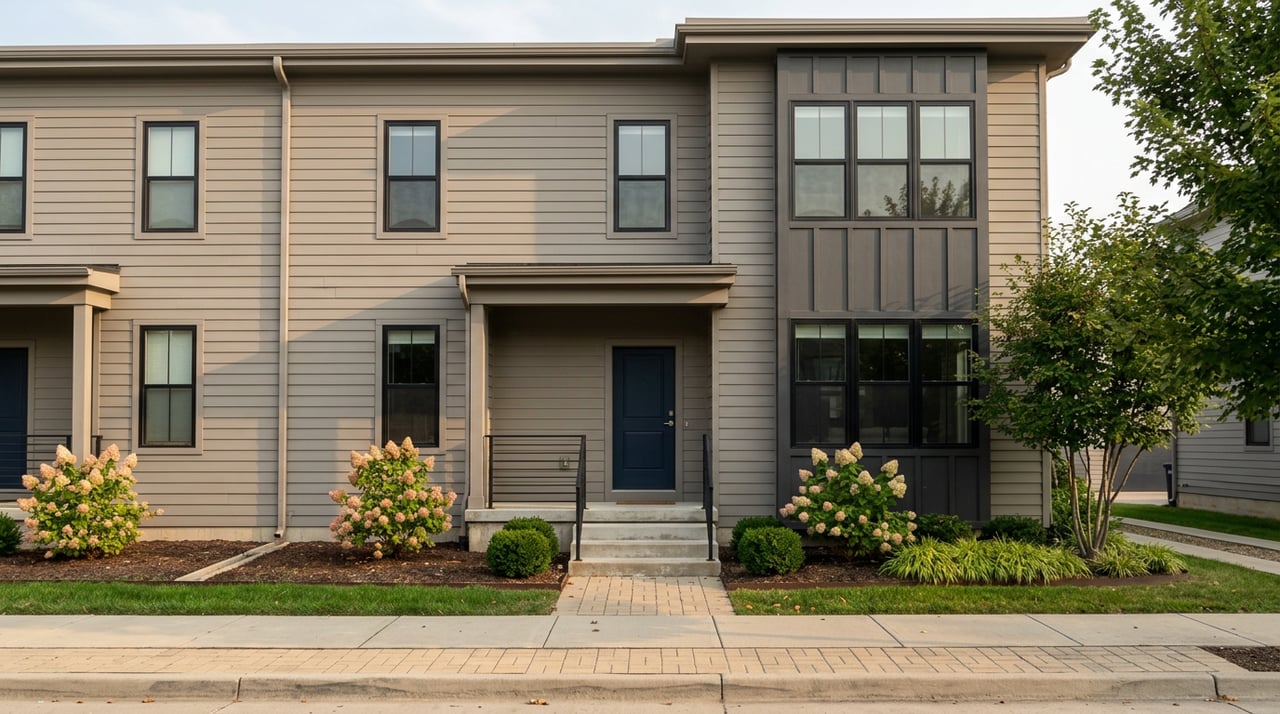
Wesmont Station is the other half of that timeline, and it's a genuinely different kind of neighborhood built on genuinely different ground. The Curtiss-Wright site that once employed 20,000 workers building aircraft engines sat vacant for years before the borough turned it into a transit village anchored by roughly 800 new townhouses. A bronze statue of Rosie the Riveter stands near the entrance to Wesmont Village, a direct nod to the site's wartime workforce and one of the few places in Bergen County where you can point to a specific piece of public art and explain exactly what it's commemorating.
The Wood-Ridge Athletic Complex, at 30 Kennedy Lane, is the physical center of that new neighborhood. It includes a children's playground, two separate dog parks split by size, a two-story recreation center with basketball courts, ball fields for baseball, softball, and soccer, and a walking path that loops the entire property. The parking lot has electric vehicle chargers, a small but telling detail about who the development was built for. Wesmont Station itself puts residents on NJ Transit's Bergen County Line, with a direct ride into New York Penn Station.
Population-wise, this is where Wood-Ridge's recent growth actually happened. Commercially, almost none of it did. New Town brought people. It didn't bring restaurants.
The Loop That Actually Connects Them
That asymmetry is the part worth sitting with. A borough that added 800 households in one redevelopment would normally expect at least a few new restaurants or shops to follow the rooftops. Wood-Ridge didn't get that. The dining, the bakery run, the ice cream stop after dinner: all of it stayed put on Hackensack Street and Valley Boulevard, in buildings that predate Wesmont Station by decades. The new neighborhood built recreation. The old neighborhood kept the kitchen.
The one place both halves of town still show up together is Veterans Memorial Park, which hosts the borough's annual street fair with live music, food, vendors, and carnival rides, along with the yearly 9/11 Memorial Service each September and the Christmas tree lighting in December. Those dates are the closest thing Wood-Ridge has to a shared calendar, the few occasions when Old Town and New Town residents end up standing in the same field instead of just passing each other on a dog walk between the two.
For everyone else, on every other weekend, the connection isn't a shared street. It's a loop.
A Wood-Ridge Saturday, stitched together:
- Morning lap through the small-dog side of the Athletic Complex, past the walking path that circles the old Curtiss-Wright footprint
- Coffee and a bagel run at Goldberg's, or a sandwich at Blue Café if it's closer to noon
- A slow pass by the Rosie the Riveter statue on the way back toward the car
- Dinner reservations at The Ridge House, or a Tuesday-through-Sunday table at Justin's if you're in an Italian mood
- Ice cream at Rita's to close out the night, weather and hours permitting
None of these stops require crossing into the other half of town more than once. That's the actual shape of a Wood-Ridge weekend: two centers of gravity, each fully formed, meeting only when someone decides to make the walk.
It's a small town that somehow ended up running two different clocks at once, one set to a bakery that's nearly a hundred years old, the other to a dog park built on a factory floor. Most people who live here don't think about it in those terms. They just know which side of town has dinner and which side has the leash law.
If you're weighing what a neighborhood like this actually feels like day to day, that's the kind of detail no listing sheet will tell you. Ask Agent Alexa — schedule your free market consultation and get the version of Wood-Ridge that comes from someone who tracks it block by block, not just listing by listing.