You have about three seconds online to win a buyer’s attention. In Lyndhurst’s fast-moving market, that first thumbnail, headline, and scroll of photos can decide whether a serious buyer books a tour or keeps swiping. If you want top dollar and a smooth timeline, the quality of your listing presentation matters. In this guide, you’ll learn which boutique marketing moves the needle in 07071, what it costs, how to structure a two-week launch plan, and how to interview agents so you hire the right partner. Let’s dive in.
Lyndhurst market snapshot
As of February 2026, third-party aggregators show strong pricing in Lyndhurst. Redfin’s ZIP-level view reported a median sale price around $708,000 with year-over-year gains, while Zillow’s aggregated value for late 2025 trended in the mid $600,000s. Typical days on market locally fall in the 3 to 6 week range depending on price tier and condition. Always ask your agent for fresh MLS comps because pricing and DOM shift month to month.
Context matters. Lyndhurst is a Bergen County commuter suburb in the New York metro, with proximity to highways and transit into Manhattan. Those buyer pools often start their search online and screen hard before touring in person, so first-impression marketing is critical for getting on their short list. You can read more about the town’s background on the Lyndhurst page on Wikipedia.
What “boutique marketing” means here
Boutique marketing is an elevated, design-forward launch that pairs premium visuals with targeted reach. It focuses on converting online views into qualified showings during the debut window. In practice, that means pro photography, strategic staging, short-form video, a 3D tour and floor plan, a dedicated listing landing page, and smart digital ads that reach likely buyers (including NYC commuters).
The payoff is simple. Better presentation creates more saves, more showings, and earlier offers, which supports stronger pricing and cleaner terms. You are not just getting more exposure. You are improving the quality of attention your home receives.
Pro photography that clicks
Photos are the number one feature buyers use when searching online. Industry surveys compiled by the National Association of REALTORS show photos consistently rank at the top of buyer priorities for evaluating homes they find on the internet. See NAR’s summary in the Field Guide to Quick Real Estate Statistics.
What that means for you: invest in a strong first photo and a cohesive set. Expect professional real estate photography in this market to run roughly 150 to 500 dollars for a standard package, with possible add-ons for drone, twilight, and extra images. A tight shot list that highlights your best sightlines and updates will increase click-throughs and saves.
Pro tip: the first thumbnail should be clean and bright with clear curb appeal or a standout interior. Lead with the strongest angle, not necessarily the front elevation if another room tells your home’s value story better.
Staging that signals value
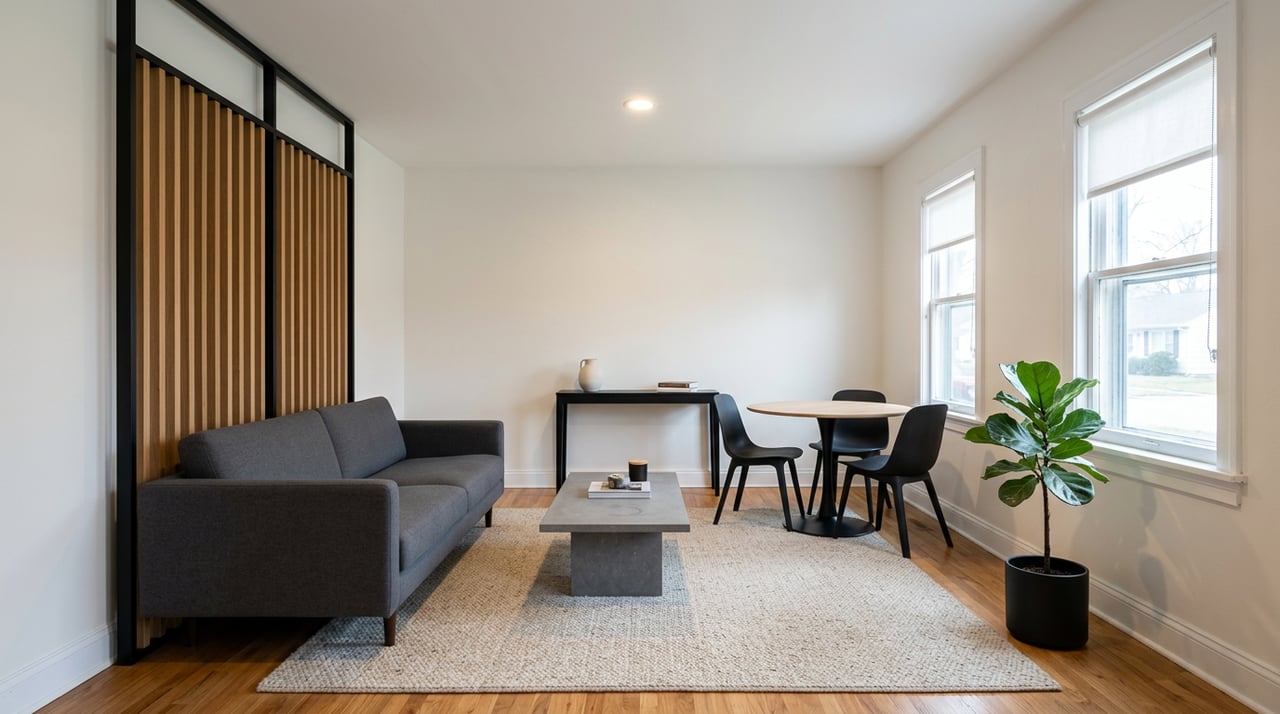
Staging is about helping buyers understand scale, flow, and how a space can live. The NAR 2025 Profile of Home Staging reports agents frequently see staged homes sell faster and for a small but meaningful premium. Many respondents cited uplifts in the 1 to 10 percent range. You can review the report summary in NAR’s newsroom piece on how staging boosts sale prices and reduces time on market.
Costs vary by scope. National surveys and consumer finance sources put full-home staging averages around several thousand dollars, with some samples near 7,000 dollars. In practice, many Lyndhurst sellers choose targeted staging of key rooms for hundreds to a few thousand dollars. For a helpful cost overview, see Bankrate’s guide to home staging costs.
High-return rooms to prioritize include the living room, kitchen, and primary bedroom. If you want to control budget, consider selective staging or virtual staging for secondary spaces.
Video, 3D tours, and floor plans
Short video and interactive 3D tours help buyers pre-qualify themselves. That means fewer casual showings and more serious visitors. Industry and vendor studies show 3D-enabled listings draw more engagement and give buyers confidence to act. For a quick primer on how Matterport-style tours work, see this explainer on 3D tours and floor plans.
Typical pricing in our area: a 3D capture is often 100 to 400 dollars depending on size and provider. A short 30 to 90 second listing video with basic editing can range from about 250 to 1,000 dollars, based on production level and add-ons. Here is a useful breakdown of media costs from a production firm’s perspective: real estate photo and video cost overview.
Make sure your 3D tour, video, and floor plan integrate cleanly with the MLS and major portals through your agent’s workflow so buyers can access everything in one click.
Targeted ads find real buyers
Most buyers start online, so paid digital placements can accelerate qualified traffic in the first two weeks. NAR’s research on buyer behavior confirms heavy internet usage during the home search. You can see those trends in NAR’s Field Guide to Quick Real Estate Statistics.
A strong campaign for a Lyndhurst home typically geo-targets nearby ZIPs and commuter hubs like Jersey City, Hoboken, and Manhattan inbound, with creative that highlights your home’s best features. The advantage of digital is measurability. You can track clicks, landing-page conversions, and showing requests. For a simple view on measuring campaign efficiency, this overview of real estate lead metrics is helpful: how to gauge CPL and conversion.
Aim for a two-week launch budget that builds early momentum, then retargets interested viewers to bring them back for an in-person tour.
Public MLS exposure wins
Broad MLS exposure and portal syndication remain the primary way to reach the full buyer pool. Recent national analyses, including Zillow Research, have found that sellers who go off-MLS often net less on average. In one 2023 to 2024 sample, the estimated penalty was about 1.5 percent or nearly 5,000 dollars on a typical sale. While every property is unique, the pattern is clear. If you want maximum proceeds, list publicly and pair that reach with boutique presentation.
Your two-week launch plan
- Week −2 to −1: Walk-through, punch list, and staging plan. Prioritize key rooms and schedule pro photography and 3D capture for the day the home is photo-ready. Draft the listing copy, build a clean landing page, and prepare ad creative (30 to 60 second video plus 3 to 6 best photos).
- Day 0: Go live on the MLS with complete media. Use premium placement where available during the debut window. Launch targeted ads with tracking in place.
- Week 1 to 2: Host an open house and a broker tour. Push short-form video on social and email a curated list of local buyer agents. Report KPIs: portal views, saves, ad impressions, CTR, and showings scheduled.
- Ongoing (week 2+): Refresh the hero photo or video clip, retarget engaged viewers, and manage showing flow. Prepare for offer review and feedback-driven adjustments.
Sample budget for 07071
- Photos, 3D tour, twilight, floor plan: about 600 dollars total in a bundled package.
- Short video with a drone clip: about 600 dollars depending on production.
- Staging (select rooms): typically 600 to 3,000 dollars, with full-home projects often higher. See Bankrate’s cost guide for ranges.
- Paid digital ads (two-week debut plus retargeting): 500 to 3,000 dollars depending on price point and competitiveness.
- Miscellaneous (print brochure, lockbox, signage): around 300 dollars.
A mid-range boutique launch commonly totals around 4,500 dollars. Scale up or down based on your property’s price, condition, and goals. The aim is a spend that returns more in price and terms than it costs.
How to interview listing agents
Ask these questions and listen for data-backed answers:
- Show me two or three recent Bergen County listings you marketed with elevated media. What were the views, saves, showings, days on market, and sale-to-list results?
- Good sign: live links, screenshots of KPIs, and clear outcomes.
- Who pays for photography and staging up front, and how do you decide what to stage?
- Good sign: transparent options and a targeted room plan tied to buyer perception. NAR’s staging findings support prioritizing key spaces. See NAR’s staging report.
- What premium placements or paid features will you use and how will you measure lift?
- Good sign: a specific plan for debut-week visibility, plus reporting on views, saves, and showings.
- What digital targeting will you run for my listing and what is the expected monthly budget?
- Good sign: defined geo targets, sample creative, and expected CPL or CTR benchmarks.
- How will you report results and how often?
- Good sign: a weekly dashboard in the first two weeks, then a steady cadence until accepted offer.
Red flags:
- No examples of past campaigns or vague promises without numbers.
- Suggesting a private or off-MLS sale by default without explaining potential price trade-offs.
MLS-only vs boutique campaign
| Factor | MLS Only | Boutique Campaign |
|---|---|---|
| Upfront cost | Minimal | A few thousand, scaled to price |
| Reach | Broad but generic | Broad plus targeted, high-impact creative |
| Lead quality | Mixed | Higher intent from video/3D and retargeting |
| Timeline | Standard | Faster early momentum and showings |
| Example lift | Limited | NAR staging research cites 1 to 10 percent seller-observed price lift for staged homes. See NAR’s staging summary. |
Ready to maximize your sale?
If you want a design-first, data-backed launch for your Lyndhurst home, let’s map your two-week plan, vendor options, and debut-week ad strategy around your goals. Schedule a free market consultation with Alexa Micciulli to get your custom timeline, budget, and pricing guidance.
FAQs
Does staging and pro photography pay off for Lyndhurst sellers?
- Industry research shows many staged, well-photographed homes sell faster and often for a small but meaningful premium. NAR’s staging profile reports seller-observed lifts in the low single digits up to around 10 percent in some cases.
How much should I budget for a boutique launch in 07071?
- A focused package with photos, a 3D tour, a short video, selective staging, and a two-week ad push often runs a few thousand dollars, with a mid-range plan around 4,500 dollars. Scale spend to your price point and goals.
Is MLS syndication really necessary to get top dollar?
- Broad public exposure typically protects price compared with private or off-MLS approaches. Recent national analyses, including Zillow Research, found off-MLS sales often net less on average, so most sellers aiming for maximum proceeds should list publicly and market aggressively.