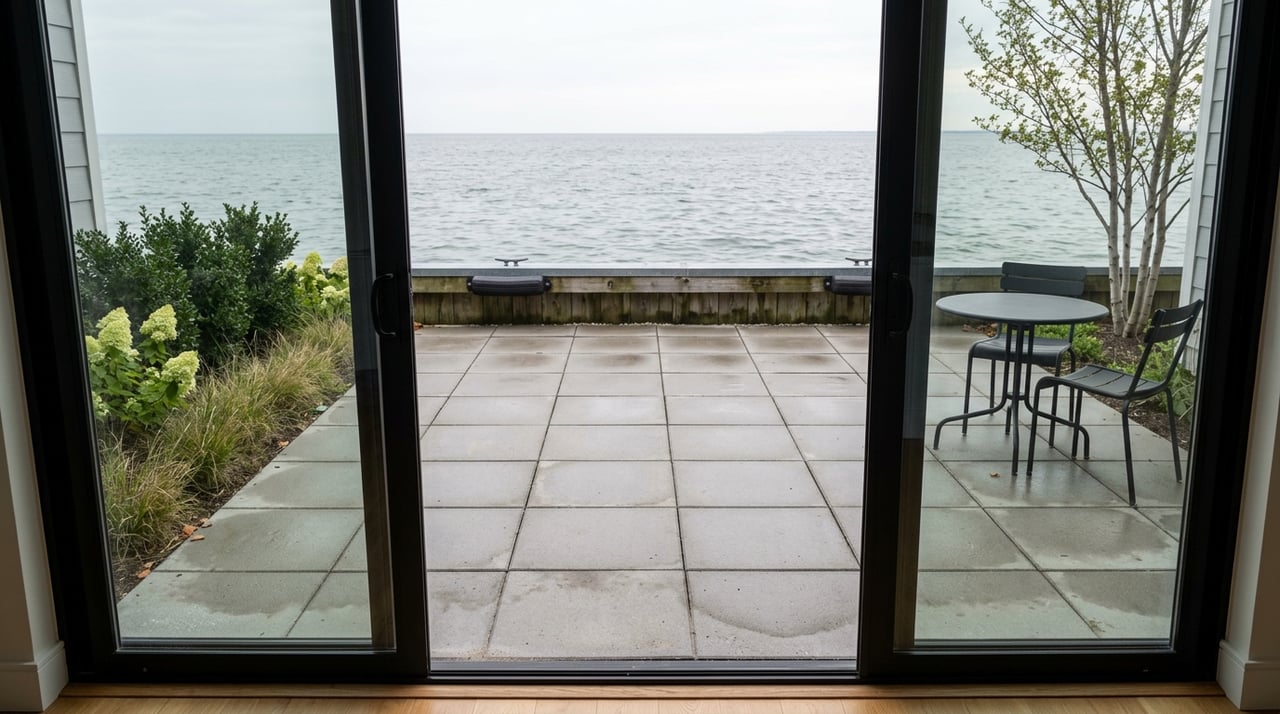
Looking for a Hudson County lifestyle that gives you waterfront views, transit options, and a more neighborhood-scaled feel? Bayonne stands out because it blends shoreline access, local commercial activity, and a housing mix that feels different from some of the region’s densest urban cores. If you are trying to decide between Bayonne’s waterfront and its downtown-style areas, this guide will help you understand how each one lives day to day. Let’s dive in.
Bayonne at a Glance
Bayonne is a peninsula bordered by Newark Bay, the Kill Van Kull, and Upper New York Bay. That geography shapes daily life in a real way, especially if outdoor access and water views matter to you.
According to the state’s public access planning documents, Bayonne already provides public waterfront access along about two miles of shoreline and is advancing a Newark Bay Greenway/RiverWalk plan that would create roughly six miles of continuous pedestrian access from Dennis P. Collins Park to Richard A. Rutkowski Park. You can explore those details in the Bayonne Municipal Public Access Plan.
Waterfront Living in Bayonne
Waterfront living in Bayonne is best understood as newer, more amenity-driven, and closely tied to public open space. In several areas, redevelopment has brought mixed-use residential buildings, garage parking, retail space, and waterfront walkways into the picture.
A city planning-board review for the former A&P/Bayview waterfront project described mixed-use buildings with residential units, parking garages, retail, restaurants, and public waterfront park and walkway space. That helps explain why the waterfront often appeals to buyers and renters who want a more modern building profile within Bayonne. You can see that framework in the planning-board report.
Waterfront parks and access
One of the biggest strengths of the waterfront is how much of the experience is not limited to private buildings. Bayonne’s parks system includes Stephen R. Gregg Park, Richard A. Rutkowski Park, Dennis P. Collins Park, 5th Street Waterfront Walkway Park, 9/11 Harbor View Memorial Park, and James J. Donovan Park.
These spaces add practical value to everyday life, not just scenery. Depending on the park, amenities include walking paths, benches, parking, fishing access, a boat launch, and spray parks.
Waterfront development to watch
Bayonne’s waterfront story is still evolving. The city has continued work tied to MOTBY and the Bayonne ferry site, and the ferry terminal parcel includes room for a terminal, parking, and walkway expansion, according to the city’s ferry terminal announcement.
That matters if you are buying with future convenience in mind. It also means you should view the waterfront as an active growth area rather than a finished product.
Downtown and Broadway Living
If the waterfront leans newer, Bayonne’s Broadway and Bergen Point areas feel more like the city’s neighborhood commercial heart. This is where the lifestyle becomes less about large-scale amenity buildings and more about daily convenience, local businesses, and a familiar main-street rhythm.
Recent city coverage points to restaurants, outdoor dining activity, and recurring community events along Broadway and in Bergen Point. Official releases have highlighted spots like Adour Bistro on Broadway, along with local festivals and food-focused events.
What daily life feels like downtown
For many people, downtown Bayonne is appealing because it makes everyday routines easier. You can picture a day where errands, a casual meal, and neighborhood events all happen within the same general corridor.
That does not mean Bayonne functions like a major nightlife district. Based on the city’s own coverage, Broadway is better understood as a local commercial strip with neighborhood-scale activity and a more residential feel around it.
Housing Differences: Waterfront vs. Downtown
One of the most important things to understand about Bayonne is that its housing stock is mixed. You are not choosing between two completely separate cities. Instead, you are choosing between different building styles, block patterns, and lifestyle priorities within the same market.
According to the city’s 2025 fair-share plan, Bayonne has 30,161 housing units. The same report says the largest structure types are two-family homes at 33.7%, 10-plus-unit buildings at 23.5%, and attached or detached single-family homes at 20.6%. More than half of the housing stock predates 1960, and the median year built is 1955. Those figures come from the city’s housing and fair-share presentation.
What that means for your search
In simple terms, the waterfront tends to offer newer condo and apartment-style living, while much of the city overall still reflects older two-family homes and smaller multifamily properties. That can be a major advantage if you want options.
If you prefer newer construction, amenities, and a more polished building package, the waterfront may fit better. If you like older housing stock, a more established street grid, and the character of smaller multifamily or two-family properties, downtown-adjacent areas may feel more natural.
Unit sizes and pricing context
Bayonne’s unit mix supports a range of household needs. The city reports that 34.2% of units are two-bedroom, 32.5% are three-bedroom, 21.8% are one-bedroom, and 3.3% are studios in the same fair-share plan.
In the city’s broader market context, the 2025-2029 consolidated plan lists a median sales price of $489,300 and a median monthly rent of $1,638. You can review those figures in the consolidated plan.
Transit and Commuting in Bayonne
Transit is a major part of Bayonne’s appeal, especially if you want access to Jersey City connections and New York City routes without giving up a more residential environment. Bayonne has four Hudson-Bergen Light Rail stations, which gives you multiple access points depending on where you live.
The city notes that NJ Transit currently lists 22nd Street and 34th Street as park-and-ride locations. The 34th Street station lot has 417 spaces, while the 22nd Street station lists 159 spaces in one lot plus an accessible lot, according to the city’s Broadway bus route update.
Light rail and bus options
The 8th Street station adds another useful transit point farther south. NJ Transit described it as a neighborhood station connecting riders to waterfront destinations, PATH trains, ferry service, and other transit links in its 8th Street station announcement.
Bus service is also part of the picture. According to the city, NJ Transit took over the Broadway bus route effective December 1, 2025, with service every 30 minutes on weekdays from 6 a.m. to 8 p.m. and on weekends from 6 a.m. to 7 p.m. along Broadway, Avenue C, and Kennedy Boulevard.
What about ferry service?
This is an area where accuracy matters. Based on the official sources provided, Bayonne-New York ferry service is under construction, not fully established.
The city and NY Waterway held a groundbreaking for the future ferry terminal in December 2025, and service was targeted for spring 2026 according to the city’s announcement. If ferry access is a key part of your decision, it makes sense to confirm the latest status before you buy or rent.
Parking and Practical Everyday Living
Parking is one reason Bayonne often gets attention from buyers and renters comparing Hudson County options. While parking rules still apply, the city says newer residential buildings were expected to provide on-site parking, and Bayonne moved to 24-hour enforcement of residential parking permit regulations in 2025, according to the city’s parking enforcement notice.
What makes Bayonne practical is the combination of residential parking structures in newer developments and station park-and-ride options at key light rail stops. For many buyers, that creates a balance between urban convenience and car ownership that can be harder to find in denser nearby markets.
Which Bayonne Lifestyle Fits You?
If you are deciding between waterfront and downtown living, it helps to focus on how you want your days to feel. Bayonne offers both styles, but they serve slightly different priorities.
Waterfront living may fit you best if you want:
- Newer buildings and more amenity-driven living
- Easy access to waterfront parks and walkways
- A setting shaped by redevelopment and future infrastructure
- A building with on-site parking or garage parking
Downtown or Broadway-area living may fit you best if you want:
- A neighborhood commercial corridor nearby
- Everyday convenience tied to dining, errands, and local events
- Older housing stock with a more traditional Bayonne feel
- A more established residential street pattern
The good news is that Bayonne does not force an all-or-nothing choice. Its appeal comes from the mix: shoreline access, local business activity, multiple transit options, and a housing stock that ranges from older two-family properties to newer waterfront development.
If you are comparing Bayonne neighborhoods, the smartest next step is to look at how building style, parking, transit access, and daily routines line up with your goals. If you want help narrowing down the right fit in Bayonne or anywhere across North Jersey, connect with Alexa Micciulli for clear, local guidance tailored to your move.
FAQs
What is waterfront living like in Bayonne?
- Waterfront living in Bayonne generally means newer mixed-use buildings, public shoreline access, and close proximity to parks, walkways, and redevelopment areas.
What is downtown living like in Bayonne?
- Downtown Bayonne, especially around Broadway and Bergen Point, is more centered on local businesses, dining, errands, and neighborhood-scale events than large-scale nightlife.
Are there more condos or houses in Bayonne?
- Bayonne has a mixed housing stock, with newer waterfront condo and apartment development alongside a citywide base of older two-family homes, small multifamily buildings, and single-family houses.
Is the Bayonne ferry already running?
- Based on the official sources provided, the Bayonne-New York ferry terminal was under construction, with service targeted for spring 2026 rather than already established.
Is parking easier in Bayonne than in denser Hudson County areas?
- Bayonne still has parking regulations, but newer buildings with on-site parking and park-and-ride options at light rail stations can make car ownership more practical than in some denser nearby markets.